AC vs DC Charging: Key Differences
Understand which use cases suit AC wallboxes, destination charging and DC fast charging.
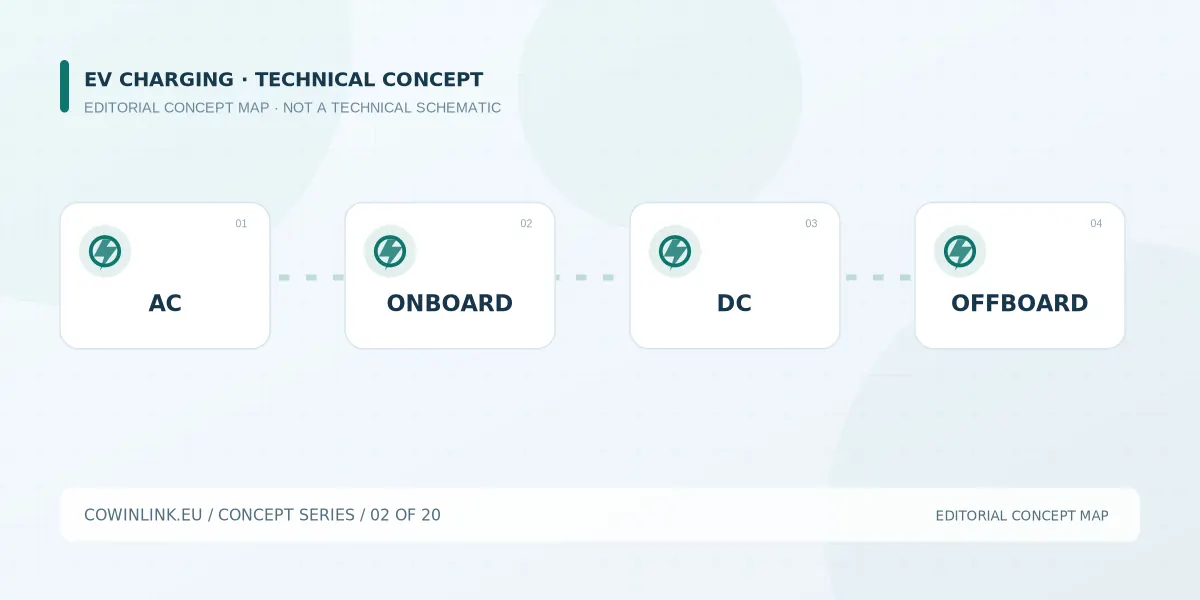
Where conversion happens
The principal distinction is the location of AC-to-DC conversion. AC equipment normally feeds the vehicle’s onboard charger; DC equipment contains the power conversion system. This influences equipment size, cost, electrical works and maintenance.
Typical applications
AC charging is common at homes, workplaces and destinations where vehicles remain parked. DC charging is often chosen when high throughput or shorter stops matter, such as motorway hubs or fleets with tight schedules.
Avoid simplistic speed claims
Nominal station power is not a promise of constant charging speed. Vehicle limits, battery state of charge, battery temperature, simultaneous sessions and site-side power sharing can reduce delivered power.
Select for dwell time, not only nameplate power
Long overnight or workday stops often favor AC because a vehicle may have sufficient time to receive the required energy. Short public stops and turnaround-critical fleets may favor DC. Check the actual charging profile, site capacity and the expected number of vehicles rather than assuming DC always delivers a faster useful session.
Cost and project scope
DC infrastructure can require substantial grid upgrades, power conversion, cooling and maintenance resources. AC proposals still require protection, installation design and potentially load management. Compare the complete lifetime system cost, not an isolated charger quotation.
Can an AC site support a commercial fleet?
Yes, if parking duration, energy need, grid capacity and scheduling align. Model the worst operating day before selecting power levels.
Primary references
Educational content, not installation or legal advice. Check current standards and local requirements.
Planning an EV charging project or sourcing enquiry?
CowinLink Limited works with manufacturing partners on EV charging sourcing, OEM/ODM and distribution enquiries. Share the target market, installation use case, preferred interface and estimated quantity; model specifications and compliance are checked for each project.
Discuss your project →