kW, kWh and Charging Time
A concise explanation of power, energy and why simple charging-time estimates have limits.
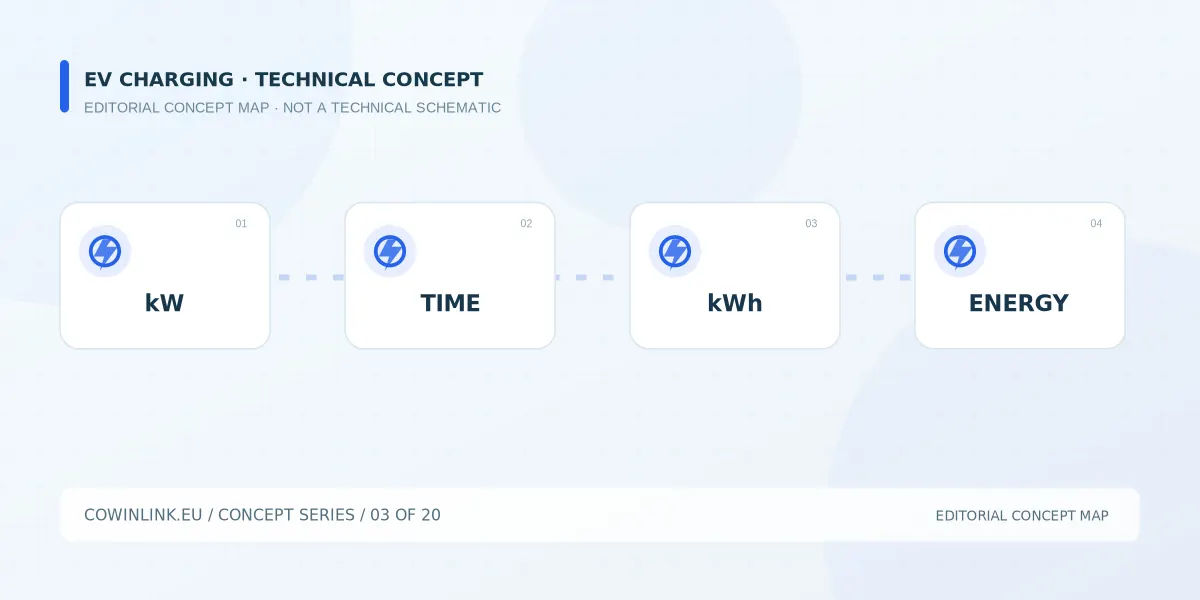
Power versus energy
Kilowatt (kW) measures the rate at which energy is transferred. Kilowatt-hour (kWh) measures an amount of energy. A 50 kW charge rate maintained for one hour would ideally deliver 50 kWh before considering losses.
An illustrative estimate
A first estimate is energy needed (kWh) divided by average delivered charging power (kW). This is only a planning approximation: charging curves, temperature, battery condition, charge limits and conversion losses change the outcome.
Interpreting advertised ratings
Always distinguish the charging station’s rated output from the vehicle’s maximum acceptance and from the power actually delivered during a session.
A simple energy calculation
For planning, estimate the usable energy that must be added and divide by realistic average charging power. For example, 30 kWh divided by an average 10 kW is approximately three hours before losses. Do not divide by the maximum advertised charger rating if the vehicle regularly accepts less.
Clarify measurements in offers
Request rated station output, simultaneous total output, metered energy, efficiency assumptions and any limits from vehicle, cable or network. In commercial billing projects, verify the legal measurement approach rather than treating backend estimates as a certified meter.
Does a 150 kW charger deliver 150 kWh each hour?
Only if it actually runs at 150 kW throughout that hour. Battery state, temperature and power sharing often cause the average to be lower.
Primary references
Educational content, not installation or legal advice. Check current standards and local requirements.
Planning an EV charging project or sourcing enquiry?
CowinLink Limited works with manufacturing partners on EV charging sourcing, OEM/ODM and distribution enquiries. Share the target market, installation use case, preferred interface and estimated quantity; model specifications and compliance are checked for each project.
Discuss your project →