Fleet and Depot Charging Basics
How to match charging schedules with routes, parking times and site capacity.
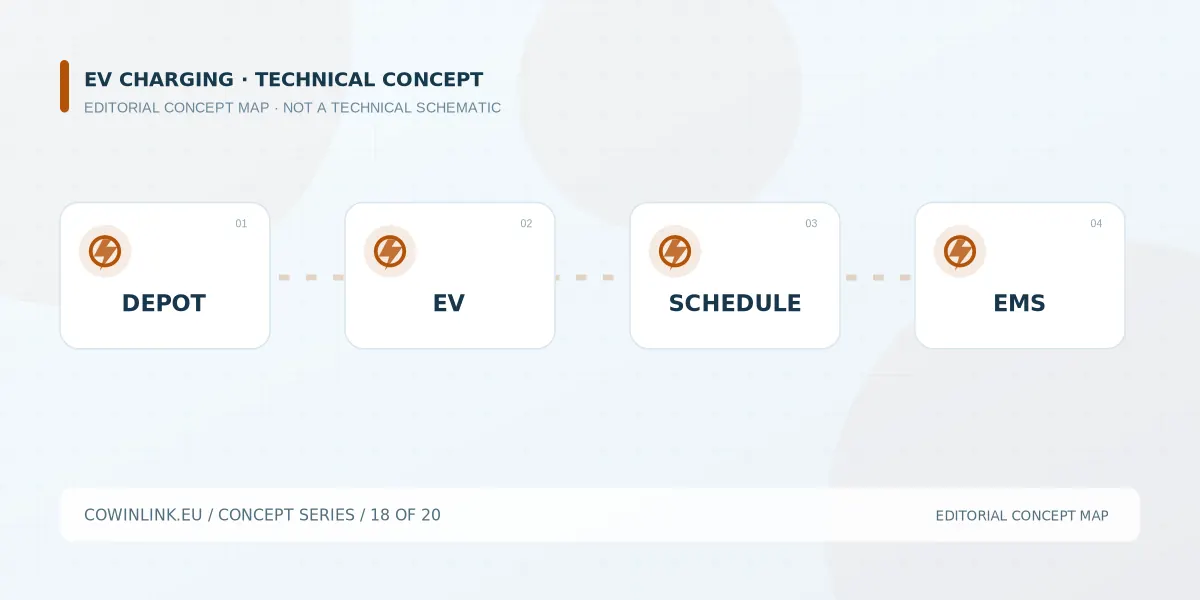
Operational model
Start with route length, energy consumption, vehicle return times, battery capacity and departure deadlines. The goal is to have enough usable energy when vehicles leave, not to maximize every charger’s peak power.
Shared capacity
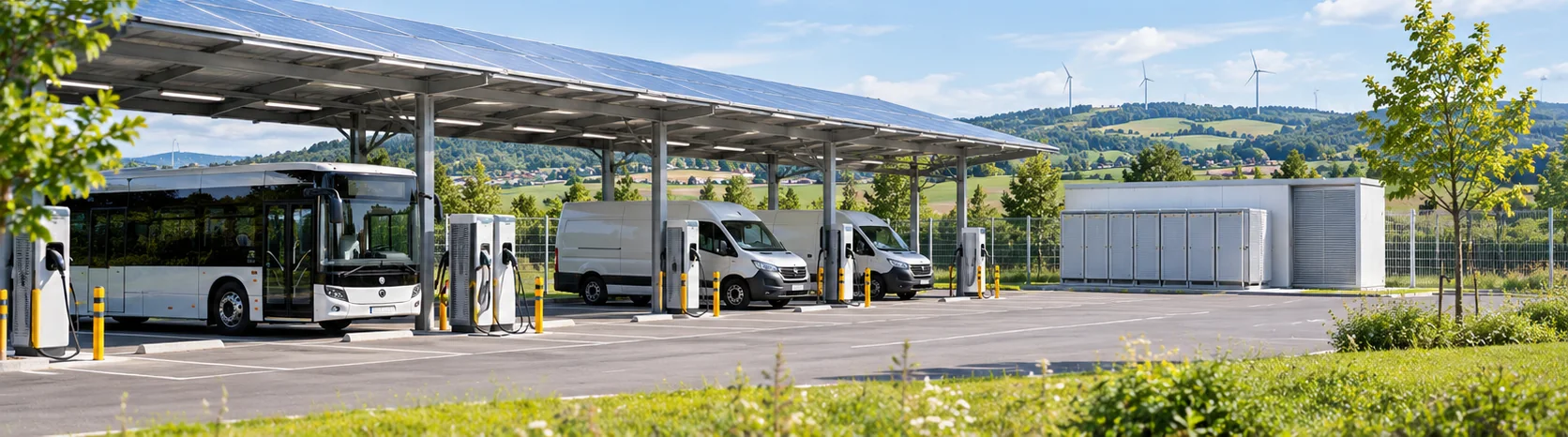
A depot may benefit from coordinated charging, charging priorities and energy management. Infrastructure sizing should consider the worst plausible operational day.
Expandability
Assess spare conduits, electrical capacity, network coverage and modular growth. Record how the plan changes if the number of vehicles or operating shifts increases.
Operational energy model
Start from return and departure windows for each vehicle, route energy consumption, seasonal reserves and maintenance downtime. Allocate charging sessions by the energy that must be available before departure rather than assuming every truck needs maximum power at all times.
Power scheduling and resilience
Compare unmanaged peak demand with coordinated charging, transformer headroom, backup procedures and future fleet growth. Consider how dispatch changes if a vehicle returns late, another remains out of service or a charger is unavailable.
Can software alone guarantee depot readiness?
No. Reliable operations also require sufficient site power, appropriate hardware, charging schedules and contingency procedures.
Primary references
- European Alternative Fuels Observatory — Recharging systems ↗
- Open Charge Alliance — OCPP protocols ↗
Educational content, not installation or legal advice. Check current standards and local requirements.
Planning an EV charging project or sourcing enquiry?
CowinLink Limited works with manufacturing partners on EV charging sourcing, OEM/ODM and distribution enquiries. Share the target market, installation use case, preferred interface and estimated quantity; model specifications and compliance are checked for each project.
Discuss your project →